
i survived the battle of gettysburg pdf
Article Plan: “I Survived the Battle of Gettysburg” PDF & Historical Context
Exploring digitized first-hand accounts, this article delves into the accessibility of “I Survived…” PDFs, examining their historical weight and potential biases within the context of Gettysburg.
The immediacy of personal narratives draws readers into history like no other source. “I Survived the Battle of Gettysburg” PDFs offer visceral connections to the past, presenting the conflict through the eyes of those who lived it. These accounts, often raw and emotional, bypass traditional historical analysis, providing a uniquely human perspective. Digitization expands access, allowing modern audiences to engage directly with these powerful testimonies, fostering empathy and a deeper understanding of the battle’s impact.
Understanding the “I Survived…” Genre
The “I Survived…” format gained popularity post-Civil War, fulfilling a public desire for intimate battlefield stories. These narratives, often published as pamphlets or incorporated into larger histories, offered compelling, if potentially subjective, viewpoints. While valuable, assessing authenticity is crucial; memory is fallible, and accounts may be shaped by trauma or a desire for recognition. Examining multiple PDFs reveals recurring themes and discrepancies, demanding critical analysis.
Popularity of Personal Narratives in History
Post-Gettysburg, a surge in personal narratives reflected a societal need to grapple with the war’s immense human cost. These accounts provided relatable, emotional connections to the conflict, contrasting with official reports. The accessibility of “I Survived…” PDFs today continues this tradition, offering direct access to soldiers’ experiences, fostering empathy and deeper historical understanding.
Authenticity and Potential Bias in Survivor Stories
While invaluable, “I Survived the Battle of Gettysburg” PDFs require critical assessment. Memory is fallible; trauma can distort recollections. Soldiers might embellish bravery or downplay flaws. Examining multiple accounts, cross-referencing with official records, and acknowledging inherent biases are crucial for responsible historical interpretation of these powerful, yet subjective, narratives.
The Battle of Gettysburg: A Brief Overview
Fought July 1-3, 1863, Gettysburg, Pennsylvania, witnessed a pivotal clash between Union and Confederate forces. Lee’s invasion of the North aimed to secure a decisive victory; Key figures included Meade (Union) and Lee (Confederate). Understanding this context is vital when analyzing “I Survived” accounts, revealing the intensity experienced by soldiers.
Key Dates and Locations (July 1-3, 1863)
The battle commenced July 1st west of Gettysburg, escalating through the 2nd at Little Round Top and Devil’s Den. July 3rd saw Pickett’s Charge, a Confederate assault. These locations shaped individual soldier experiences documented in “I Survived” narratives, influencing their recollections and survival stories.
Major Figures: Union & Confederate Commanders
Union General George Meade led the Army of the Potomac, while Confederate General Robert E. Lee commanded the Army of Northern Virginia. Survivor accounts often mention these figures, detailing observations of leadership and its impact on battlefield events. Their decisions directly influenced the fates chronicled in “I Survived” PDFs.
Identifying the “I Survived the Battle of Gettysburg” PDF

Locating these accounts often involves searching platforms like Archive.org and Google Books. Numerous editions exist, compiled from various soldier diaries and recollections. Identifying the specific author and origin of each “I Survived” PDF is crucial for assessing its authenticity and contextualizing the narrative presented within.
Common Sources & Repositories (Archive.org, Google Books)
Archive.org and Google Books serve as primary repositories for digitized Gettysburg survivor accounts. These platforms host scanned copies of regimental histories, personal memoirs, and compiled collections featuring “I Survived” narratives. Searching keywords like “Gettysburg,” “Civil War,” and “personal recollections” yields relevant PDF documents for research.

Variations in Editions & Authorship (Multiple Accounts Exist)
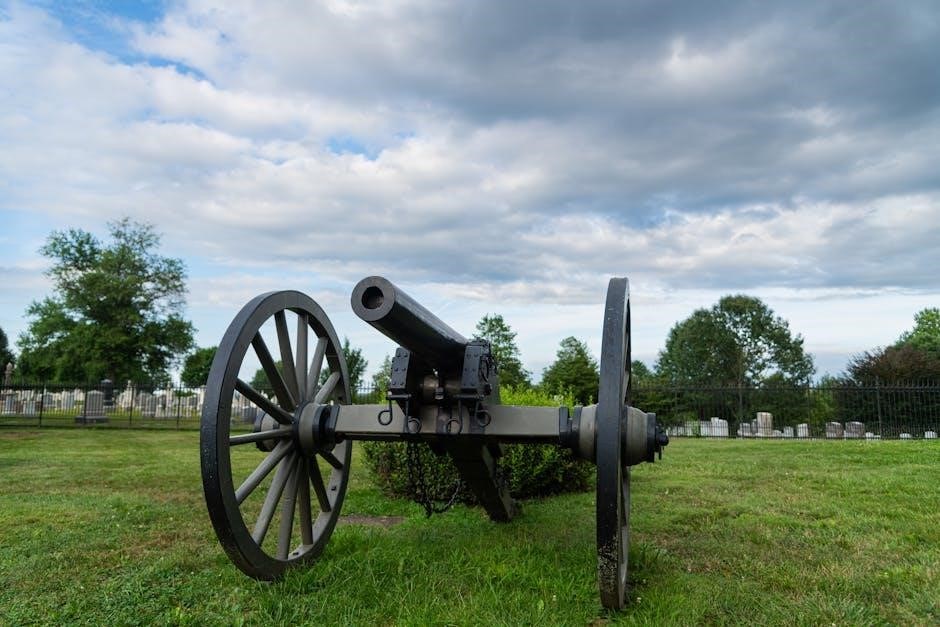
Numerous “I Survived Gettysburg” accounts exist, varying in length and detail. Different editions often compile multiple testimonies, while others focus on single soldiers’ experiences. Authorship ranges from soldiers themselves to compilers and historians. Recognizing these variations is crucial for assessing each PDF’s unique perspective and potential biases.
Analyzing Common Themes in Gettysburg Survivor Accounts
Gettysburg survivor PDFs reveal recurring themes: the sheer horror of combat, witnessing unimaginable death and injury, and the pervasive fear experienced by soldiers. Accounts frequently detail experiences differing by unit and state, highlighting varied perspectives on the battle’s chaos and its lasting psychological impact on those who endured it.
The Horrors of Combat: Witnessing Death & Injury
Survivor PDFs graphically depict the brutal realities of Gettysburg. Soldiers recount scenes of devastating wounds, mass casualties, and the constant presence of death. These accounts emphasize the psychological trauma of witnessing such carnage, detailing the lasting emotional scars inflicted by the battle’s intense and unrelenting violence.
Experiences of Soldiers from Different Units/States
“I Survived” PDFs reveal varied perspectives based on unit placement and state affiliation. Accounts highlight differing combat experiences – from Pickett’s Charge to Little Round Top – and reflect regional pride or anxieties. These narratives demonstrate how the battle impacted soldiers from Maine to Mississippi, showcasing a fragmented, yet unified, struggle.
Specific Accounts Featured in Popular PDFs
Frequently, Tilton’s “I Witnessed Gettysburg” appears in compiled PDFs, offering a detailed, personal observation of the battle’s chaos. Chamberlain’s defense of Little Round Top and Wainwright’s artillery experiences are also commonly included. These survivor testimonies provide compelling, individual perspectives within larger Gettysburg narratives, enriching historical understanding.
Tilton’s “I Witnessed the Battle of Gettysburg” (Often Included)
Hiram Stephens Tilton’s account is a cornerstone of many “I Survived” Gettysburg collections; His detailed observations, captured shortly after the battle, vividly portray the intense fighting and its human cost. Tilton’s narrative frequently serves as a primary source, offering a ground-level perspective on the pivotal three-day conflict.
Other Notable Survivor Testimonies (e.g., Chamberlain, Wainwright)
Beyond Tilton, accounts from figures like Joshua Lawrence Chamberlain and Alfred Wainwright enrich the historical record. Chamberlain’s defense of Little Round Top and Wainwright’s experiences with the Iron Brigade provide crucial perspectives. These PDFs offer diverse viewpoints, showcasing the varied realities faced by soldiers during the battle.
The Role of Gettysburg in the Civil War
Gettysburg marked a turning point, halting Lee’s invasion of the North and significantly weakening Confederate forces. Survivor accounts within these PDFs illuminate the battle’s strategic importance and its devastating impact on morale – both Union and Confederate. The victory bolstered Northern resolve, shifting the war’s momentum.
Turning Point of the War: Strategic Significance

PDFs containing survivor testimonies reveal Gettysburg’s crucial role in crippling the Confederacy’s offensive capabilities. Lee’s defeat forced a defensive posture, diminishing hopes for European recognition. These firsthand narratives underscore the battle’s impact on the war’s trajectory, solidifying Union control and foreshadowing eventual victory.
Impact on Morale: North & South
Survivor accounts within these PDFs vividly illustrate the contrasting morale shifts. Union victories, detailed in personal recollections, boosted Northern confidence and resolve. Conversely, Confederate losses, recounted with despair, deeply impacted Southern morale, fueling war-weariness and questioning the cause. These PDFs offer poignant emotional insights.

PDF Accessibility & Digital Preservation
Locating “I Survived” Gettysburg PDFs often involves platforms like Archive.org and Google Books, offering free, legal access to digitized accounts. However, copyright concerns necessitate careful reproduction practices. Digital preservation efforts are crucial to ensure these invaluable primary sources remain accessible for future generations of researchers and enthusiasts.
Finding Free & Legal Downloads
Accessing Gettysburg survivor accounts is often possible through Archive.org and Google Books, providing digitized PDFs within legal frameworks. Battle.net, while gaming-focused, exemplifies digital distribution models. Prioritize sources respecting copyright; avoid unauthorized reproductions. Careful searching yields valuable historical resources readily available online for study.
Concerns about Copyright & Reproduction
Digitizing historical texts, like Gettysburg accounts, raises copyright issues. While many are in the public domain, some editions may retain restrictions. Respecting intellectual property is crucial; unauthorized reproduction is illegal. Battle.net’s digital sales model highlights legitimate distribution. Verify source legality before downloading or sharing PDFs to avoid infringement.
Historical Accuracy & Verification of Accounts
Survivor narratives, while valuable, aren’t flawless records. Memory fades, and biases influence recollections within “I Survived” PDFs. Cross-referencing with official records, regimental histories, and multiple accounts is vital. Battle.net’s game content exemplifies detailed world-building, mirroring the need for accuracy. Identifying exaggerations or misremembered details strengthens historical understanding.
Cross-Referencing with Official Records & Regimental Histories
Validating “I Survived” PDF accounts requires comparison with muster rolls, casualty lists, and unit movements documented in official records. Regimental histories offer contextual details, verifying troop positions and engagements. Like Battle.net’s meticulous game data, these sources provide a framework for assessing narrative consistency and identifying potential discrepancies.
Identifying Potential Exaggerations or Misremembered Details
Survivor accounts, while valuable, aren’t immune to the fallibility of memory or embellishment. Like seeking worthy opponents on Battle.net, discerning truth requires scrutiny. Time’s passage, trauma, and personal biases can distort recollections. Comparing multiple PDFs and official records helps pinpoint inconsistencies and assess the reliability of specific claims.
The Psychological Impact on Gettysburg Survivors
Gettysburg’s horrors left deep scars. PDFs reveal soldiers grappling with trauma, akin to facing futuristic battlefields in Call of Duty. Many suffered what we now recognize as PTSD, struggling to readjust to civilian life. Coping mechanisms varied, but the psychological weight of witnessing such carnage profoundly impacted their long-term well-being.
Post-Traumatic Stress & Long-Term Effects
Survivor accounts, often found in digitized PDFs, detail recurring nightmares and debilitating flashbacks – echoes of the battlefield’s chaos. Like heroes in World of Warcraft facing endless challenges, these soldiers carried their trauma. This led to long-term anxiety, depression, and difficulty forming relationships, impacting generations.
Coping Mechanisms & Returning to Civilian Life
PDF testimonies reveal varied coping strategies: faith, family, and often, silence. Returning to farms or towns felt alien after Call of Duty’s intense combat. Many struggled with readjustment, finding solace in veteran communities or turning to alcohol. Like building a Hearthstone deck, rebuilding life required careful strategy.
Gettysburg Today: Memorialization & Preservation
Survivor PDFs inform modern preservation efforts at the Gettysburg National Military Park, ensuring their experiences aren’t forgotten. Digital archives, like Battle.net’s game content access, offer wider reach. Ongoing research validates accounts, connecting personal narratives to the battlefield’s physical landscape, honoring those who fought there.
The Gettysburg National Military Park
Survivor accounts, often found in digitized PDFs, directly influence interpretive programs at the park. Like Battle.net’s diverse game worlds, Gettysburg offers immersive experiences. Preservation relies on understanding soldier testimonies, mirroring how World of Warcraft builds legendary narratives. The park strives to honor individual stories within the larger conflict.
Ongoing Research & Interpretation of the Battle
Digitized survivor PDFs fuel continuous re-evaluation of Gettysburg’s events, akin to Battle.net’s evolving game content. Researchers cross-reference accounts with official records, identifying nuances. Like Hearthstone’s strategic depth, interpretation requires critical analysis. New perspectives emerge, enriching our understanding of the battle’s human cost.
Using Survivor Accounts in Educational Settings
“I Survived” PDFs offer powerful primary sources, fostering critical thinking – much like Call of Duty’s strategic gameplay. Students analyze perspectives, comparing testimonies to official histories. These accounts humanize the conflict, moving beyond dates and figures. They encourage empathy and deeper engagement with the Civil War’s complexities.
Primary Source Analysis & Critical Thinking Skills
Analyzing “I Survived” PDFs demands scrutiny, akin to navigating World of Warcraft’s intricate lore. Students assess authorship, potential bias, and corroboration with regimental records. Examining details—like those in Hearthstone’s card strategies—reveals nuances. This sharpens analytical skills, fostering informed historical interpretation and responsible source evaluation.
Connecting Personal Experiences to Broader Historical Context
Gettysburg survivor accounts, like immersive experiences in Call of Duty, personalize a pivotal moment. These PDFs illuminate the battle’s impact beyond strategic maps, revealing soldier anxieties and motivations. Linking individual testimonies to larger campaigns—akin to Black Ops’ narratives—deepens understanding of the war’s human cost and turning point.
Related Resources: Books, Websites, & Museums
Beyond the “I Survived” PDF, explore Gettysburg’s history via the National Military Park and Archive.org’s digitized collections. Websites like Battle.net offer immersive experiences, mirroring the battle’s scale. Regimental histories and books provide context, while World of Warcraft’s lore parallels the era’s heroism.
The Evolution of Civil War Historical Interpretation
Initially focused on grand strategy, Civil War history now prioritizes soldier experiences, fueled by accessible PDFs like “I Survived…” accounts. Digital platforms, akin to Battle.net, democratize access. Modern analysis cross-references testimonies with records, acknowledging bias, mirroring Hearthstone’s strategic depth.
“I Survived the Battle of Gettysburg” PDFs offer visceral connections to the past, supplementing strategic overviews like those found in Call of Duty. These accounts, accessible via platforms like Archive.org, humanize conflict, reminding us of individual courage amidst chaos, echoing World of Warcraft’s heroic narratives.