
origins of american government guided reading activity
Explore the roots of U.S. governance through guided reading. Students examine colonial self‑government, Locke’s ideas, the Magna Carta, and early state constitutions, linking historical concepts to modern democratic principles. Students compare colonial charters with constitutions.

Purpose and Learning Objectives
Students will analyze the political philosophies that shaped early American governance, including the influence of John Locke’s theories of natural rights and the Magna Carta’s precedent of limited monarchy. By examining primary sources such as colonial charters, town‑meeting records, and early state constitutions, learners will identify how concepts of consent, representation, and the separation of powers evolved from English political thought to the foundations of the United States. The activity encourages critical comparison of colonial self‑government practices with the emerging federal structure, fostering an understanding of how early debates about liberty, property, and civic duty informed the drafting of the Constitution and the Bill of Rights. Through guided reading, students will develop skills in contextual analysis, source evaluation, and the synthesis of historical arguments, preparing them to articulate the continuity and change that characterize American political development. By engaging with these primary documents, students will also practice critical thinking skills such as identifying bias, evaluating evidence, and constructing coherent arguments that reflect the historical context of the era. This holistic approach not only deepens comprehension of foundational political ideas but also equips learners to apply these insights to contemporary civic discussions. Students learn more!

Structure of the Guided Reading Sessions
The guided reading activity is organized into three distinct phases that collectively foster deep engagement with the origins of American government. First, the “Pre‑Reading” phase invites students to preview key terms and concepts such as “natural rights,” “limited government,” and “colonial charters.” During this stage, learners annotate a short excerpt from John Locke’s Second Treatise of Government and identify parallels with the Magna Carta, establishing a conceptual framework for the session. Second, the “Active Reading” phase involves close analysis of primary documents, including the 1688 English Bill of Rights, the 1776 Declaration of Independence, and early state constitutions. Students work in pairs to highlight passages that illustrate the evolution of consent, representation, and the separation of powers, then share insights in a structured discussion guided by targeted prompts. Third, the “Synthesis” phase requires learners to compose a brief reflective essay that connects the historical material to contemporary democratic practices. They will also complete a vocabulary matching exercise, linking terms such as “bicameral legislature,” “united colonies,” and “three‑fifths compromise” to their definitions. Throughout each phase, the instructor facilitates formative assessment through real‑time feedback, encouraging students to articulate connections between English political thought and the emerging American constitutional framework. By the end of the session, participants will have developed a nuanced understanding of how early colonial experiences and Enlightenment ideas coalesced into the foundational principles of the United States. All insights are shared. now
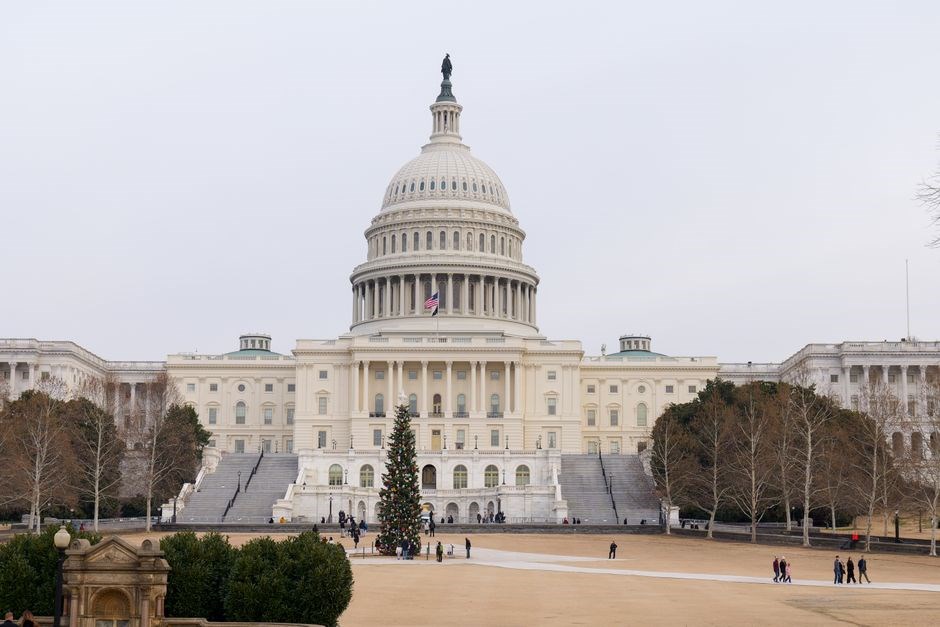
Foundations of American Government
English political thought, especially Locke and the Magna Carta, shaped early colonial governance. Town meetings and state constitutions established self‑rule, consent, and limited authority, laying the groundwork for the U.S. Constitution. These principles guided drafting, laws.
Influence of English Political Thought: Locke and the Magna Carta
John Locke’s theories of natural rights, government by consent, and the right of revolution profoundly shaped colonial political culture. His Second Treatise of Government argued that individuals possess life, liberty, and property, and that legitimate authority derives from the consent of the governed. Colonists adopted these ideas, embedding them in local charters, town meetings, and early state constitutions. Locke’s emphasis on limited government resonated with the English experience of the Magna Carta, a 1215 charter that curtailed the monarch’s power and established the principle that law governs the ruler. The Magna Carta’s assertion that the king must respect the rights of his subjects provided a historical precedent for constitutional limits on executive power. Together, Locke’s philosophical framework and the Magna Carta’s legal precedent forged a foundational ethos of individual liberty, rule of law, and representative governance. This ethos guided the drafting of colonial charters, the formation of local assemblies, and the articulation of grievances that culminated in the Declaration of Independence. The colonists’ reverence for these English political traditions is evident in the language of the Declaration, the structure of the Articles of Confederation, and the eventual Constitution, which codified the principles of limited government, separation of powers, and protection of individual rights. By integrating Locke’s ideas with the Magna Carta’s legal legacy, American founders created a political system that balances sovereign authority with the rights of citizens, a balance that remains central to American democracy today.
Early Colonial Governance: Town Meetings and State Constitutions
Colonial governance evolved through grassroots assemblies and codified charters that reflected English legal traditions. In New England, the town meeting became a democratic forum where freeholders voted on local matters, elected officials, and ratified ordinances, embodying the principle of direct participation. These meetings fostered a sense of communal responsibility and served as a training ground for future leaders. In the Southern colonies, proprietary governors and royal governors exercised greater centralized authority, yet local councils and assemblies still played advisory roles, balancing executive power with local input. By the mid‑1700s, each colony drafted its own constitution, articulating rights, governance structures, and mechanisms for accountability. The Massachusetts Constitution of 1780, for example, established a bicameral legislature, a separate judiciary, and a system of checks and balances, while the Pennsylvania Constitution of 1776 incorporated a bill of rights and a unicameral legislature. These documents not only addressed immediate colonial concerns—such as taxation, land distribution, and militia organization—but also codified the philosophical underpinnings of Locke and the Magna Carta, ensuring that the rule of law and consent of the governed remained central. The experience of town meetings and state constitutions provided a practical laboratory for experimenting with representative government, directly influencing the debates at the Constitutional Convention and the eventual formation of the United States Constitution. The emphasis on local self‑governance laid the groundwork for the later adoption of a federal system that balanced state sovereignty with national unity, a balance that continues to shape American political life today. These early experiments also highlighted the importance of written constitutions, inspiring the framers to embed explicit protections for individual liberties and to design a government structure that could adapt to changing circumstances. Moreover, the practice of town meetings cultivated a culture of public debate and civic engagement that persists in modern local governance, underscoring the enduring legacy of colonial democratic traditions.

Key Constitutional Conventions

The 1787 Convention produced plans:, Virginia Plan proposed a bicameral legislature based on population; New Jersey Plan favored equal state representation; Three‑Fifths Compromise balanced slave counts; Federalist Papers defended framework!
Virginia Plan and the Bicameral Legislature
The Virginia Plan, proposed by Edmund Randolph and championed by James Madison, called for a strong national government with a bicameral legislature. The upper house, the Senate, would be elected by state legislatures, ensuring equal state influence, while the lower house, the House of Representatives, would be elected directly by the people, with seats allocated based on each state’s population. This dual‑representation model aimed to balance the interests of populous and less populous states, fostering a federal structure that could adapt to demographic shifts. By granting the lower house population‑based representation, the plan sought to give larger states greater voice, reflecting the democratic principle that political power should correlate with the size of the electorate. The plan also proposed that the national legislature would have the power to tax, regulate commerce, and conduct foreign affairs, thereby consolidating fiscal and diplomatic authority at the federal level. Critics argued that this concentration of power could threaten state sovereignty, prompting compromises such as the Three‑Fifths Compromise and the eventual adoption of a bicameral system that balanced representation. Ultimately, the Virginia Plan’s vision of a bicameral legislature with proportional representation became a cornerstone of the Constitution, shaping the federal government’s architecture and ensuring that both population size and state equality were integral to democratic governance. Its influence persists in modern debates over Senate reform, gerrymandering, and the balance of power between federal and state governments, illustrating the enduring relevance of the Virginia Plan’s principles. This legacy continues to shape policy and law.
New Jersey Plan and State Representation
While the New Jersey Plan was not adopted, its insistence on equal state representation shaped the constitutional dialogue. By proposing a single house where each state had one vote, the plan highlighted the necessity of protecting smaller states from being overridden by larger ones. This insistence contributed to the eventual compromise that created a bicameral Congress, with the Senate offering equal state representation and the House providing representation based on population. The New Jersey Plan’s legacy endures in contemporary debates over Senate reform, the balance of power between federal and state governments, and the ongoing quest for a more equitable system of representation.
The plan’s emphasis on equal representation also influenced the drafting of the Bill of Rights, ensuring that individual liberties would not be compromised by a powerful central government. Its proponents argued that a single, equal‑voice house would serve as a safeguard against tyranny, a principle that resonated with the Founding Fathers’ fear of concentrated power. Even though the plan was ultimately set aside, the debate it sparked remains a cornerstone of American constitutional theory, reminding legislators that the balance between state sovereignty and national authority is delicate and must be continually negotiated.
Moreover, the New Jersey Plan’s insistence on a single house with equal votes for each state laid groundwork for later discussions on the Senate’s role as a counterbalance to the House of Representatives. It highlighted the tension between democratic equality and the protection of minority interests, a theme that continues to influence modern debates over electoral reform, gerrymandering, and the balance of power between the federal government and the states.
By embedding these ideas into the constitution, the New Jersey Plan helped create a system that balances voices, ensuring no state—large or small—dominates, democracy today!!!

Three-Fifths Compromise and Population Calculations

The Three‑Fifths Compromise, adopted during the 1787 Constitutional Convention, addressed how enslaved people would be counted for representation and taxation. By agreeing that each enslaved individual would count as three‑fifths of a free person, the framers sought to balance the political power of slaveholding states against the interests of free states. This calculation directly influenced the apportionment of seats in the House of Representatives and the allocation of federal taxes. The compromise was rooted in the broader debate over population counts, which also affected the distribution of seats in the Senate, where each state received equal representation regardless of population. The formula for counting enslaved individuals—three‑fifths—was used until the 13th Amendment abolished slavery, after which the census counted all persons equally. The compromise also had lasting effects on the political landscape, shaping the balance of power between the North and South and setting a precedent for future compromises on contentious issues. Its legacy is evident in modern discussions about representation, census methodology, and the ongoing struggle to ensure that all citizens are counted fairly in the democratic process. Modern scholars cite the Three‑Fifths Compromise to show how past compromises influence present politics, underscoring that balancing representation with equality is ongoing evolving debate that shapes policytoday now
Federalist Papers and Shays’ Rebellion Context
The Federalist Papers, a series of essays by Alexander Hamilton, James Madison, and John Jay, were published in 1787–1788 to promote ratification of the Constitution. They addressed fears of a strong central government by arguing that a balanced federal system would protect individual liberties and prevent tyranny. The essays also responded to contemporary concerns such as the economic instability and political unrest exemplified by Shays’ Rebellion (1786–1787), a farmer uprising in Massachusetts protesting high taxes and debt. By highlighting the weaknesses of the Articles of Confederation—particularly the lack of a national army to quell internal disturbances—the Federalists used Shays’ Rebellion as evidence that a stronger federal government was necessary to maintain order and safeguard property rights. Their arguments emphasized the need for a standing army, a unified judiciary, and a system of checks and balances, all of which were designed to prevent the kind of chaos that had erupted during the rebellion. The essays thus linked the theoretical framework of the Constitution with real‑world events, illustrating how the new government could address both external threats and internal dissent while preserving democratic principles.
The essays highlight how Constitution balances power, preventing any branch from dominating and protecting liberty for all.!

Ratification and Early Federalism
Ratification debates balanced state and federal power. Anti‑Federalists feared a strong central government; Federalists argued for a robust national framework to secure commerce, defense, and unity. The First Congress adopted the Bill of Rights, establishing early and federalism peace.
Federalist vs Anti-Federalist Debates
During the late 1780s, the fledgling republic faced a critical choice: adopt a Constitution that would create a strong central government or retain the loose framework of the Articles of Confederation. Federalists, led by figures such as Alexander Hamilton, James Madison, and John Jay, argued that a robust federal structure was essential for economic stability, national defense, and the ability to regulate commerce. They emphasized the necessity of a unified judiciary, a standing army, and the power to tax. Anti‑Federalists, including Patrick Henry, George Mason, and George Clinton, feared that such concentration of power would erode individual liberties and state sovereignty. They championed a Bill of Rights to safeguard personal freedoms and insisted on a more decentralized system. The debate unfolded through public speeches, pamphlets, and the Federalist Papers, a series of essays that defended the Constitution’s merits. The Anti‑Federalists organized conventions, drafted resolutions, and circulated petitions demanding amendments. The tension culminated in the ratification process, where states held votes that reflected regional concerns. Ultimately, the Constitution was adopted, but the promise of a Bill of Rights was realized through subsequent amendments, ensuring that the new federal framework would coexist with protections for the people. This clash set the stage for governance law in
The First Congress and the Bill of Rights
The First Congress convened in New York City on March 4, 1789, under the new Constitution. It faced the immediate task of establishing federal institutions, setting precedents, and addressing the urgent needs of a nation still recovering from war. The Senate and House debated the creation of a national bank, the appointment of the first Supreme Court, and the organization of the executive branch. Yet, the most enduring legacy of this inaugural session was the promise of a Bill of Rights. Anti‑Federalists had campaigned vigorously for explicit protections of individual liberties, and the First Congress responded by adopting twelve amendments in 1791, later condensed to ten. These amendments codified freedoms such as speech, press, and assembly, safeguarded due process, and limited the power of the federal government over the states; The Bill of Rights became a cornerstone of American political culture, ensuring that the new federal framework would not trample the rights of its citizens. Its passage also set a precedent for constitutional amendment, demonstrating that the Constitution could evolve to meet the changing needs of society while preserving foundational principles. The First Congress’s work laid the institutional groundwork for a stable republic and established a tradition of balancing federal authority with individual freedoms that continues to shape U.S. governance today. These foundational debates and the Bill of Rights set a lasting framework that would guide future amendments and inspire democratic movements worldwide. Moreover, the First Congress’s willingness to compromise on contentious issues exemplified the practical application of the Constitution’s design, fostering a culture of negotiation that remains vital to American democracy, and unity and hope for all.

Impact and Legacy
The study of the origins of American government offers a lens through which modern citizens can assess the evolution of democratic ideals, federalism, and civil liberties. By tracing the influence of English political thought—particularly Locke’s natural rights and the Magna Carta—students recognize how foundational concepts were adapted to the New World context. The examination of early colonial governance, such as town meetings and state constitutions, demonstrates the practical experimentation with self‑rule that prefigured the federal system. The analysis of the Virginia and New Jersey plans, the Three‑Fifths Compromise, and the Federalist Papers illuminates the negotiation between states’ interests and the need for a unified national framework. The First Congress’s drafting of the Bill of Rights underscores the enduring commitment to protecting individual freedoms while balancing federal authority. These historical insights reinforce the importance of constitutional interpretation, amendment processes, and the role of public debate in sustaining a responsive government. Consequently, guided reading activities that focus on these origins cultivate critical thinking, civic engagement, and an appreciation for the dynamic nature of American democracy, ensuring that future generations remain informed and active participants in the nation’s ongoing constitutional dialogue. This legacy inspires civic duty and democratic renewal worldwide.